In This Medical Cleaning Guide
- 1. The Australian Regulatory Framework (RACGP & NHMRC)
- 2. The Mandatory Two-Step Clean & Disinfect Protocol
- 3. TGA-Registered Hospital-Grade Disinfectants
- 4. Clinical Zone Risk Stratification (Consultation vs Waiting)
- 5. Preventing Cross-Contamination: Microfibre & PPE Protocol
- 6. Frequently Asked Questions by Practice Managers
1. The Australian Regulatory Framework (RACGP & NHMRC)
General practice accreditation, dental surgery licensing, and day hospital certification in Australia require rigorous adherence to the Standards for General Practices (5th Edition) published by the Royal Australian College of General Practitioners (RACGP), as well as the Australian Guidelines for the Prevention and Control of Infection in Healthcare published by the National Health and Medical Research Council (NHMRC).
Unlike conventional commercial cleaning where visual cleanliness is the primary metric, healthcare environmental cleaning is measured on bio-burden reduction, pathogen inactivation, and strict adherence to validated standard precautions.
2. The Mandatory Two-Step Clean & Disinfect Protocol
A common failure in unspecialized cleaning services is applying disinfectant directly to soiled surfaces. Chemical disinfectants are rapidly neutralized by organic soil, skin cells, and blood serum proteins. Australian medical standards require the strict execution of the Two-Step Protocol:
- Physical Soil Removal (Cleaning): The surface is thoroughly wiped with an approved neutral pH detergent solution and clean microfibre to physically detach and remove dirt, dust, and organic matter.
- Microbiological Inactivation (Disinfection): A hospital-grade disinfectant is applied evenly and permitted to dwell wet for the manufacturer's validated contact time (typically 3 to 10 minutes) to eliminate viral and bacterial strains.
Wiping a disinfectant dry immediately after application renders it completely ineffective against resistant bacteria (such as MRSA and VRE). At Sparkle, our healthcare teams are trained to respect the required contact dwell times before final dry-buffing.
3. TGA-Registered Hospital-Grade Disinfectants
All chemical agents utilized in healthcare facility cleaning must be evaluated and listed on the Australian Register of Therapeutic Goods (ARTG) administered by the Therapeutic Goods Administration (TGA).
Commercial off-the-shelf supermarket cleaners are strictly prohibited in clinical environments. Sparkle utilizes broad-spectrum TGA-registered formulations incorporating accelerated hydrogen peroxide (AHP), quaternary ammonium compounds (quats), and sodium hypochlorite for high-risk biohazard spills, ensuring 99.999% microbial eradication.

4. Clinical Zone Risk Stratification
Healthcare facilities are segmented into four distinct contamination risk tiers, each dictating specific cleaning frequencies and chemical protocols:
| Risk Category | Facility Areas | Frequency | Chemical Specification |
|---|---|---|---|
| High-Risk Clinical | Procedure rooms, minor surgery, pathology collection | Twice Daily / Post-Procedure | TGA Hospital-Grade Disinfectant with sporocidal/virucidal claims |
| Moderate-Risk Clinical | Doctor consultation rooms, examination plinths, dental operatories | Daily (Nightly) | Two-step neutral detergent + broad-spectrum hospital biocide |
| Public / High-Touch | Patient waiting rooms, reception desks, pediatric play zones | Daily + Mid-Day Wipe | Hospital-grade sanitising detergent + alcohol surface wipes |
| Low-Risk Admin | Staff tearoom, practice manager office, records archives | Daily / Scheduled | Neutral commercial detergent and microfiber dusting |
5. Preventing Cross-Contamination: Microfibre & PPE Protocol
Cross-contamination between examination rooms and general patient reception represents an unacceptable clinical liability. Sparkle enforces:
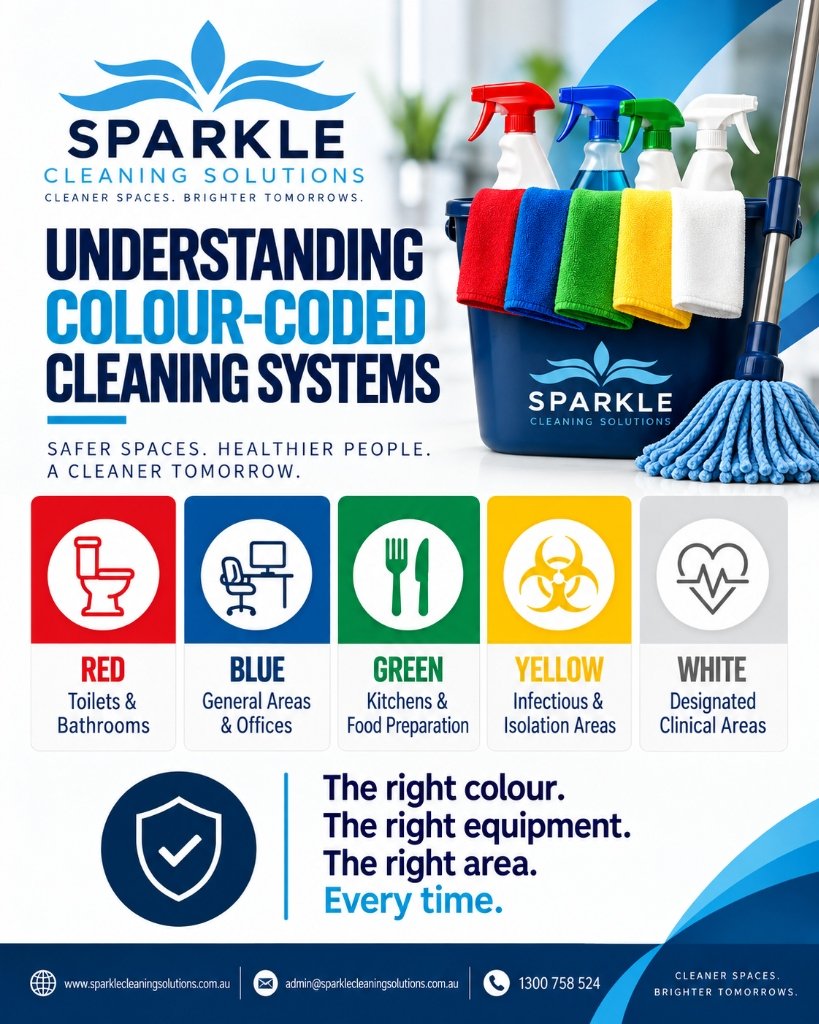
- Single-Room Microfibre System: Mop heads and cloths used in an examination room or washroom are placed into sealed biohazard laundry hampers immediately after servicing that specific room—never dipped back into clean solution buckets.
- PPE Segregation: Cleaners wear nitrile gloves, protective aprons, and masks, changing disposable gloves between clinical treatment zones.
- Sharps & Biohazard Non-Interference: Cleaning personnel never handle clinical yellow sharps bins or open medical waste; these are segregated under strictly audited protocols.
6. Frequently Asked Questions by Practice Managers
Request a Medical Facility Cleaning Assessment
Partner with certified healthcare cleaners who understand RACGP compliance, sterilisation requirements, and clinical risk mitigation across Sydney and Brisbane.