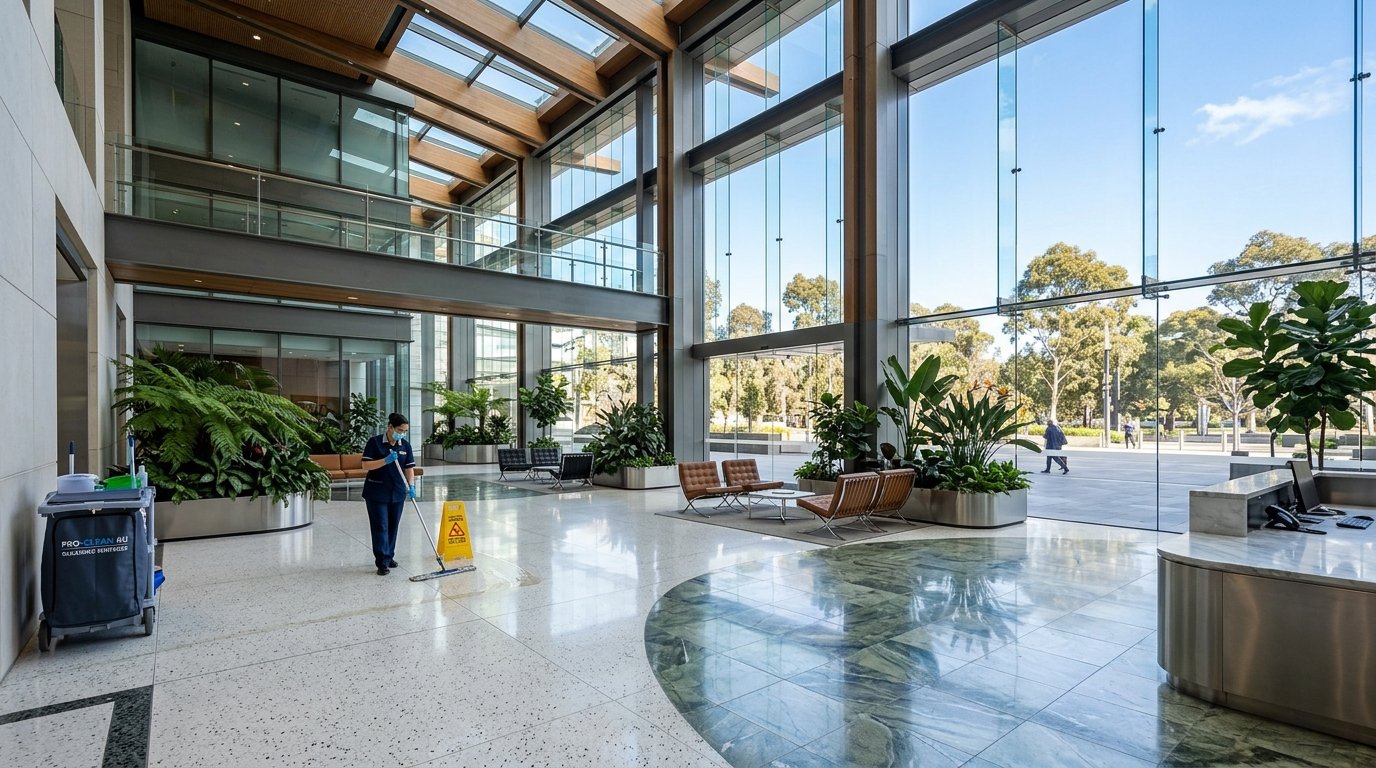
Executive Summary: Commercial Window Cleaning
- Clean exterior and interior glazing maximizes natural daylight transmission, enhances tenant wellbeing, and projects professional corporate credibility.
- Modern water-fed pole systems (WFP) utilise reverse osmosis and deionised water to clean up to 5–6 storeys (20 metres) safely from the ground.
- High-rise abseiling (industrial rope access) and elevated work platforms (boom lifts) require strict compliance with WHS Working at Heights Regulations and AS/NZS 1891.
- Recommended frequency varies from monthly for ground-floor retail to quarterly or semi-annually for commercial multi-storey building facades.
1. The Impact of Pristine Glazing on Commercial Properties
In modern Australian commercial architecture, expansive glass curtain walls and large floor-to-ceiling windows dominate exterior building design. While glass provides aesthetic appeal and maximizes natural daylight, it is continuously exposed to atmospheric pollution, traffic exhaust particulates, mineral dust, bird droppings, and coastal salt spray.
When left uncleaned, mineral deposits etch permanently into the glass surface via chemical bonding (calcium silicate formation), resulting in irreversible "glass cancer" that necessitates costly pane replacement. Routine commercial window cleaning is therefore both an aesthetic brand imperative and an essential preventative asset preservation measure.
2. Overview of Commercial Window Cleaning Methodologies
Professional window cleaning companies select specialized techniques based on architectural geometry, building height, access constraints, and safety regulations:
| Methodology | Height Range & Access | Operational Advantage | Safety & Regulatory Standard |
|---|---|---|---|
| Traditional Squeegee & Applicator | Ground level to 3 metres (internal partitions, retail shopfronts). | Instant drying, precision edge detailing, zero dripping on internal carpets. | Standard WHS manual handling; ladder safety controls. |
| Pure Water-Fed Pole (WFP) | Up to 20 metres (approx. 5 to 6 storeys) from the ground. | Eliminates working at heights risks; uses 100% deionised water; leaves zero chemical residue. | Safe Work Australia ground-based controls; pedestrian exclusion zones. |
| Elevated Work Platforms (EWP / Booms) | Up to 45+ metres where ground clearance permits vehicle access. | Enables direct hand-detailing on complex architectural overhangs and canopies. | High-Risk Work Licence (WP); harness tie-off compliance; daily plant pre-start checks. |
| Industrial Rope Access (Abseiling) | Unlimited height (skyscrapers, high-rise towers, sheer facades). | Complete mobility over any building height without heavy machinery blocking street traffic. | AS/NZS 1891, AS/NZS ISO 22846; certified anchor point testing; IRATA/ARAA qualified rope technicians. |
| Building Maintenance Units (BMUs / Cradles) | Multi-storey high-rise towers with permanent roof-mounted tracks. | High capacity; handles heavy facade wash equipment and glass replacement. | AS 2550.10 crane and hoist compliance; certified annual structural engineering inspections. |
3. How Pure Water Technology Works
Modern commercial window cleaning is revolutionized by Reverse Osmosis (RO) and Deionisation (DI) pure water filtration. Standard tap water contains dissolved solids (calcium, magnesium, chlorine) measured at 150 to 300 Parts Per Million (PPM). When tap water evaporates on glass, these minerals remain behind as unsightly white spots and streaks.
Sparkle Cleaning Solutions deploys multi-stage filtration units that purify water down to 000 PPM total dissolved solids. This pure water acts as a natural solvent: dirt molecules bond aggressively to the water molecules, and when rinsed away, the glass dries 100% streak-free without needing chemical squeegees. Because no detergent residue is left behind, windows remain clean significantly longer by resisting airborne dust adhesion.
4. Recommended Window Cleaning Frequencies by Sector
- Street-Level Retail & Showrooms: Fortnightly to monthly (high pedestrian fingerprint smudges and traffic particulate exposure).
- Commercial Office Corporate Facades: Quarterly to semi-annually for external facade glass; monthly for internal glass partitions and boardroom vision strips.
- Coastal Properties (Sydney Eastern Suburbs, Gold Coast): Bi-monthly external washing to prevent aggressive salt crystallisation and pitting of aluminum mullions.
- Industrial Warehouses & Logistics Hubs: Every 6 to 12 months for high-level clerestory glazing and office windows.